Mark where it sits and it becomes a map — front and back, down to the zone. What you mark is what the rest of the app works from.
For when something's off and you can't name it.

Check in with how your body actually feels. Move what's stuck — breathe, shake, use your voice, let go. And it moves with you: fine learns your body clock and follows your day, sunrise to the small hours.
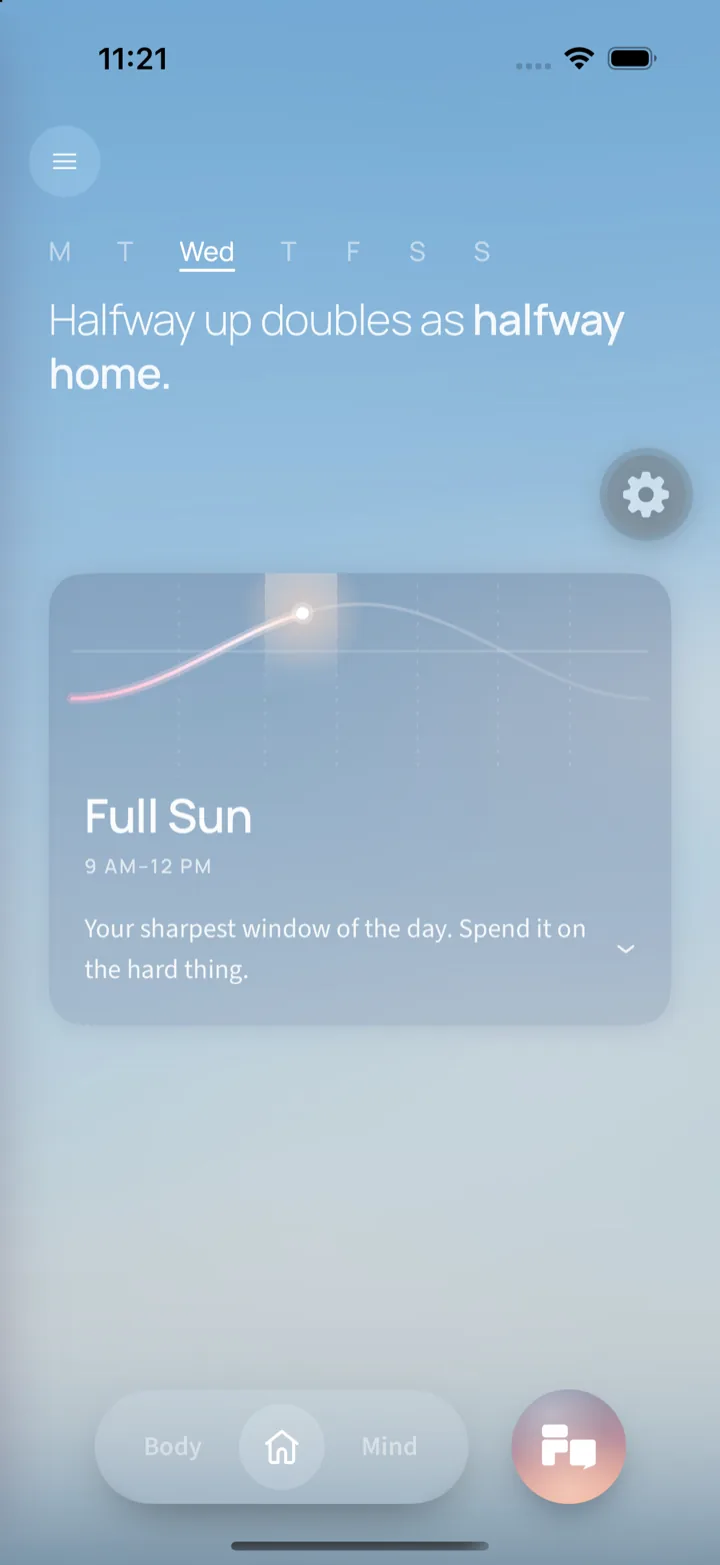
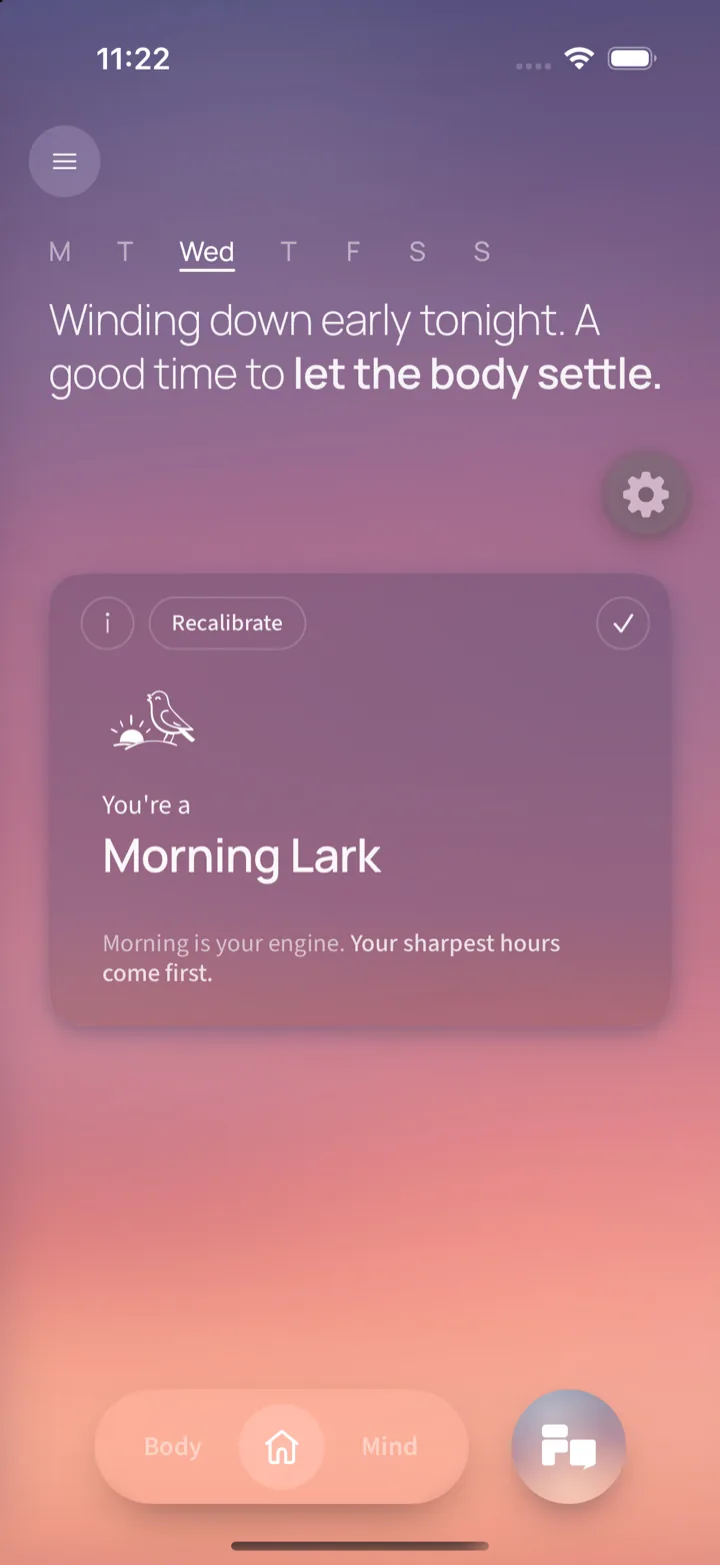
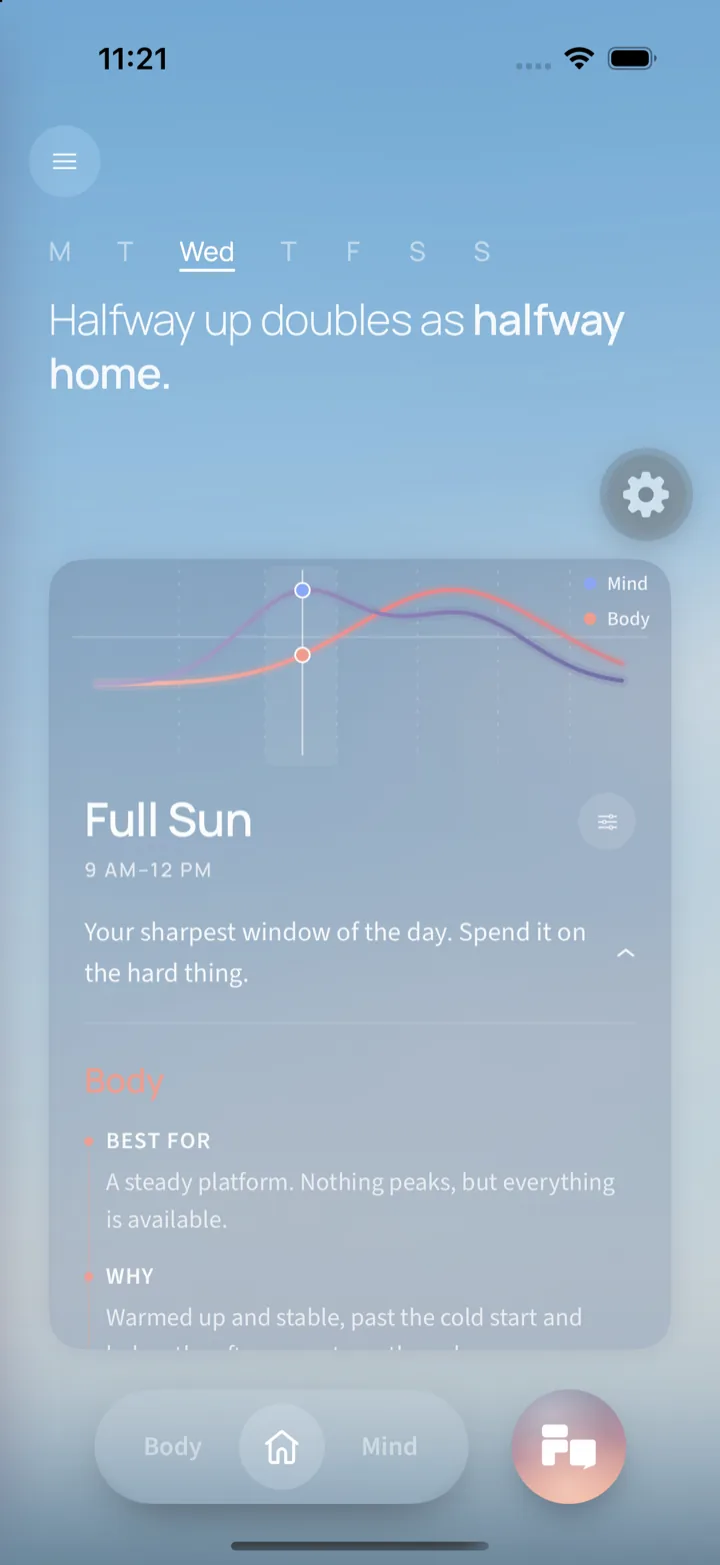
A short calibration puts you somewhere on the lark-to-owl scale. Home then maps your own day into named windows and tells you what each one is for — so instead of a streak and a timer you get "the repair shift, and it starts early. One job: sleep."
Nobody arrives wanting "progressive muscle relaxation". They arrive wired, or foggy, or flat. So that's the question fine asks — and the answer routes you somewhere specific.
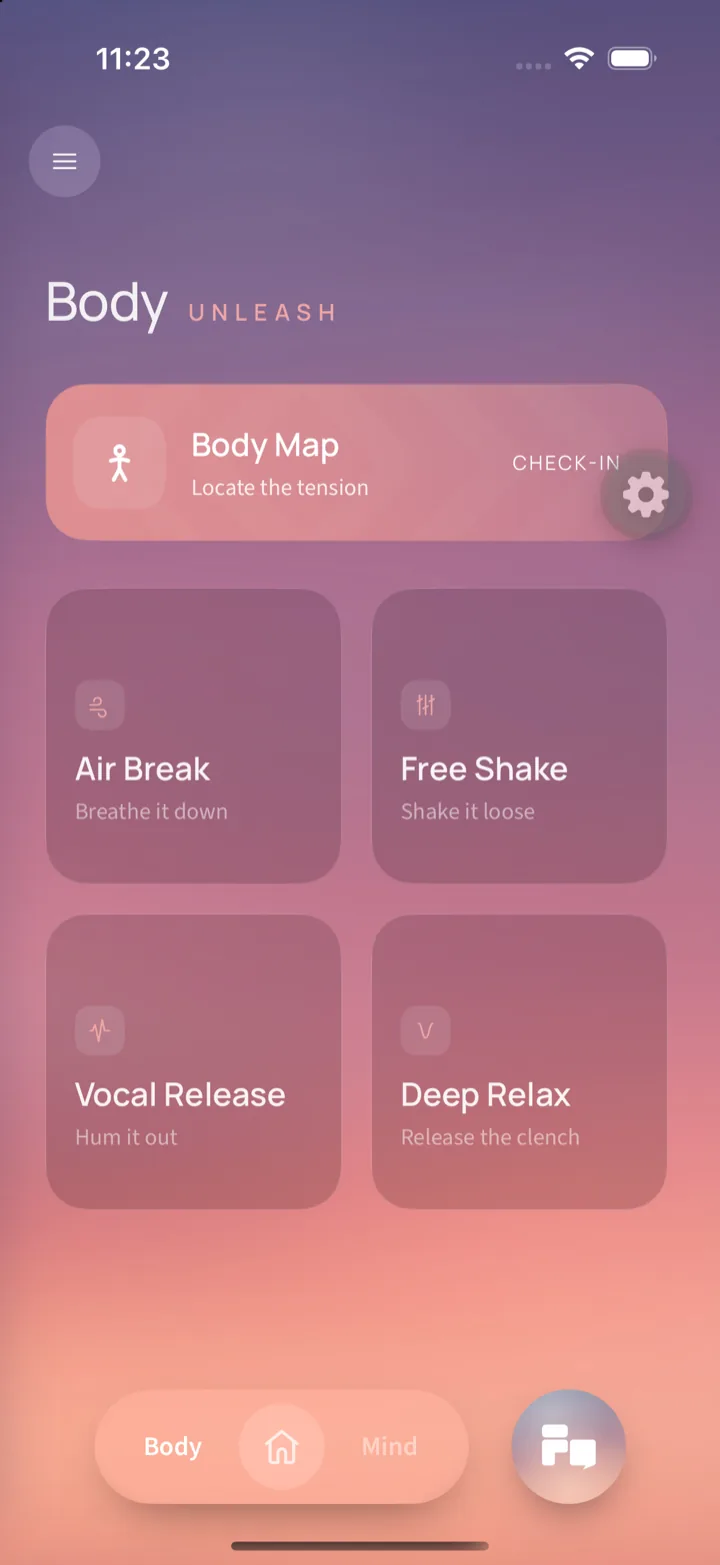
Stress lands somewhere physical before you have words for it. Mark where it sits — it becomes a map — then pick a way to move it out.
Nothing here asks you to sit still and be calm about it. Breathe on a count, shake the charge loose, make noise, clench and let go. Each one is a different way of moving something out of the body, and each takes a couple of minutes.
Mark where it sits and it becomes a map — front and back, down to the zone. What you mark is what the rest of the app works from.
For when something's off and you can't name it.
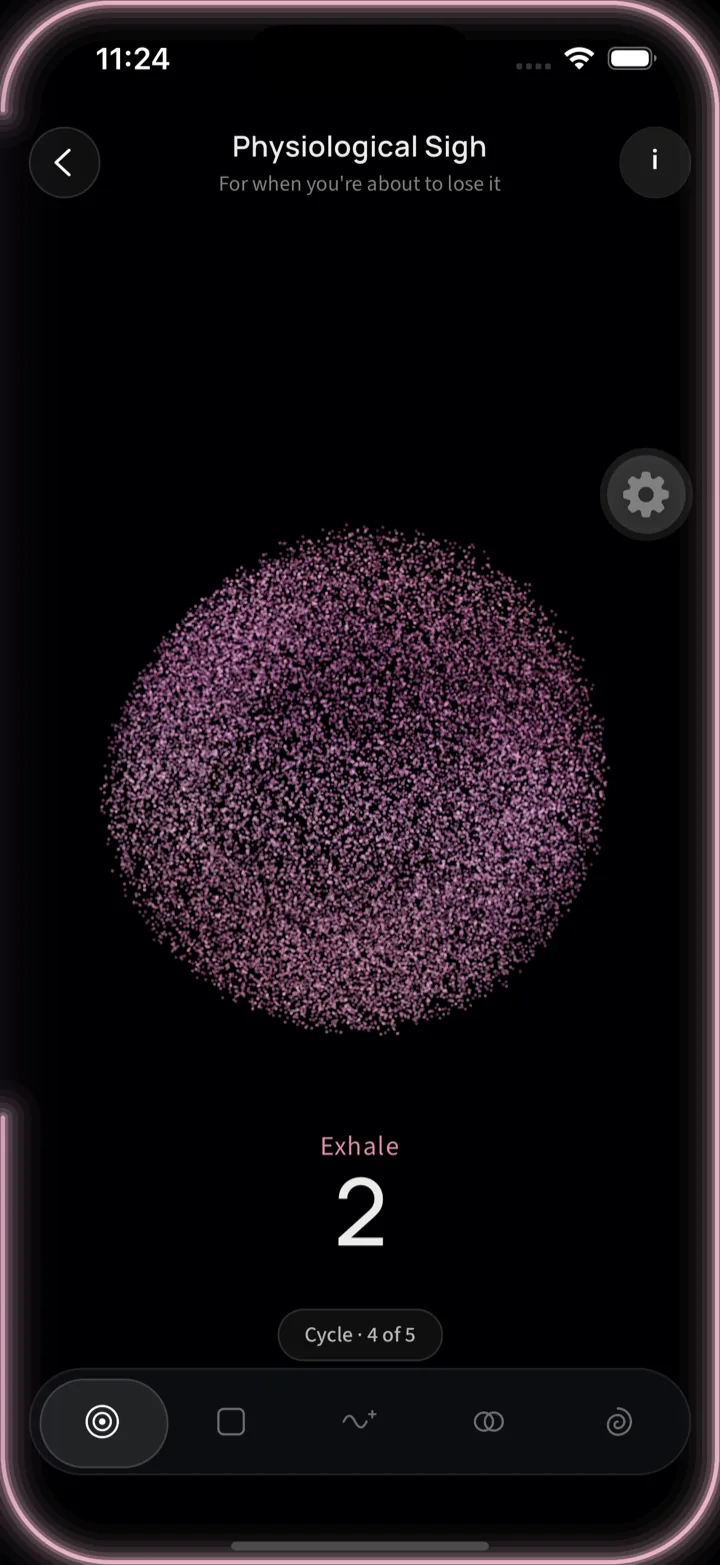
A guided breath, about two minutes, with the count drawn as it runs. Five patterns, from Physiological Sigh — for when you're about to lose it — to 4-7-8 to wind down.
For when you're activated now — the fastest way down.
Shake the charge out, the way animals discharge stress once the danger has passed. Follow the pace or set your own.
For when you're too wired to sit still.
Hum, tone or shout it out, with your voice moving what's on screen. Guided, or a playground with no clock on it.
For something stuck in your chest.
Tense and release, zone by zone — on the zones you picked off the body map, so it goes where you said it hurts.
For tension you can't put down.
Log a period and the month draws itself: confirmed days in rose, the fertile window in lavender, the next cycle as a prediction you can correct.
For seeing your cycle next to how the body actually felt.
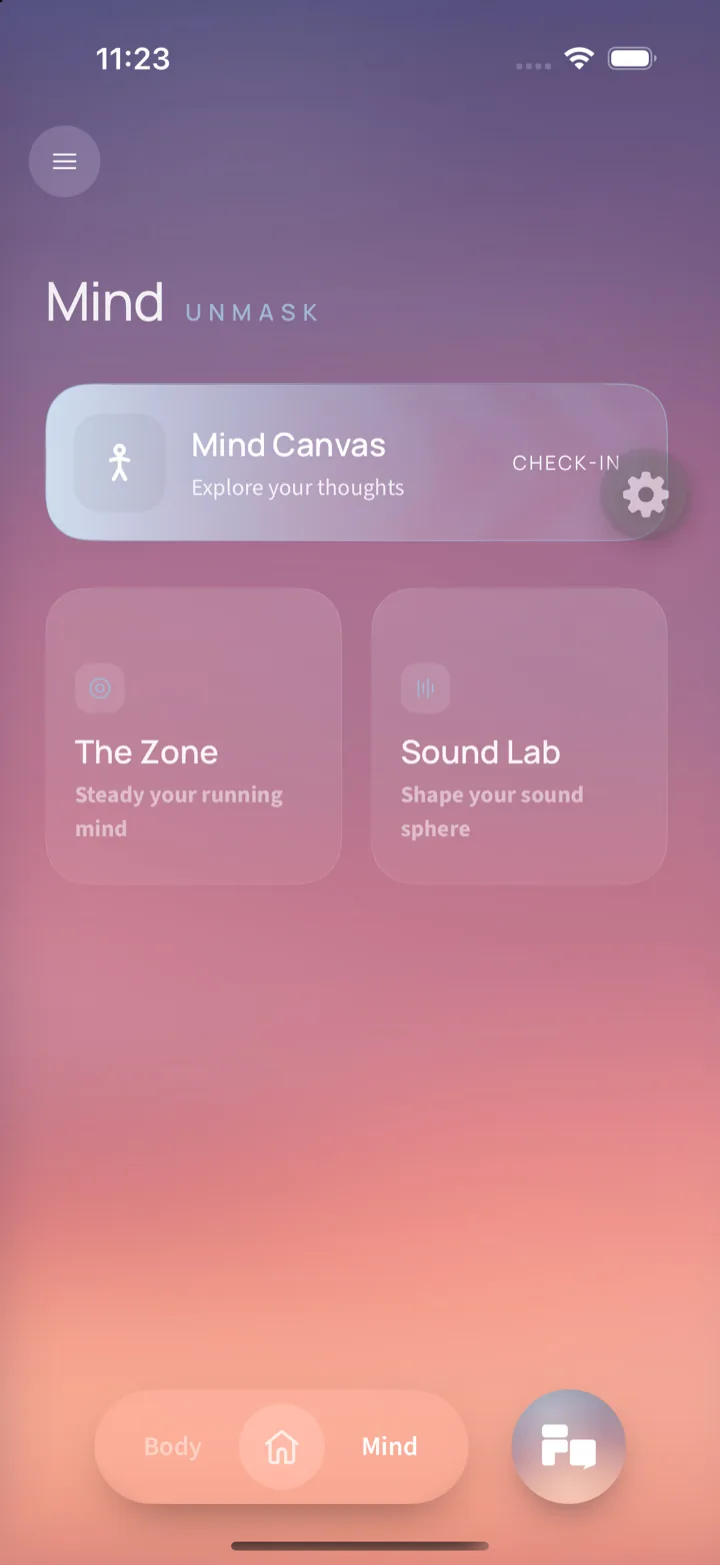
Somewhere to empty your head, and somewhere to go quiet once it's empty.
The order matters less than having both. Some nights the head has to come out onto a page before anything else will land; some nights the room has to change first and the words can wait.
Write, draw or speak it out — freestyle with no format to get right, or a guided template for when a blank page is too much.
For when your head is too loud.
Guided meditation — or live, where the session is written as it goes and adapts to what you say back.
For when you want to be walked through it.
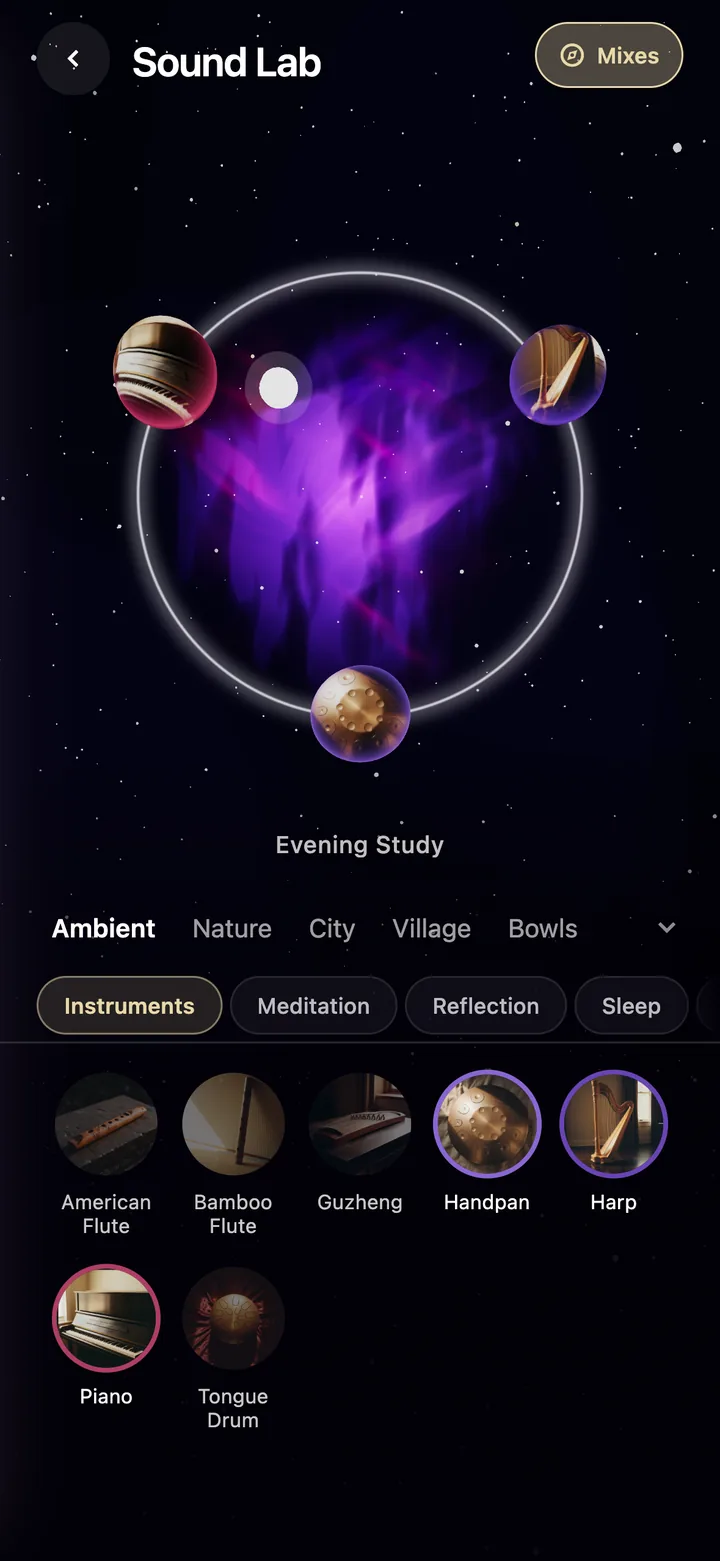
Place sounds around you rather than stacking them: drag instruments onto a disc and move yourself through the mix. Or start from a ready-made one.
For when the room has to change first.
Bottom-right. On every screen.
Not a tab you have to go to. The orb rides along the bottom of every surface, so the distance between noticing something and saying it out loud is one tap — from inside a breathing session, from a half-written journal entry, from anywhere.
You don't have to arrive with it worked out either. "I can't sleep" is a whole opening. So is "I feel nothing".
Speak and it transcribes as you go, or type if the room isn't right for talking. Switch mid-conversation.
For when saying it out loud is easier than writing it.
What you marked on the body map, what you wrote last week, the session you just finished. You don't restate it.
For when you'd rather not start from the beginning.
Say what's going on and it can open the thing that helps — the same feature you'd have had to go hunting for.
For when you don't know which one you need.
Three in the morning is a normal time to need this, and there's nothing to book and nobody to wait for.
For the hour you actually need it, not the next opening.
Microphone, camera, photos, location and health access are requested per feature, when you use it. Decline any of them and the rest of fine still works.
Settings → Account Info → Delete Account removes your account and its data. No support ticket, no retention negotiation.
fine supports everyday wellbeing. It is not a medical device, not a diagnosis, and not a replacement for professional care.
fine is a personal wellness app for body and mind, made by EmotionX. It learns your body clock and follows your day: check in with where you feel tension, use breathwork and release exercises to move what's stuck, journal and meditate, and talk it through by voice or text.
Not yet. fine is in development, for iOS and Android. Early access is by email — leave your address and we'll tell you when there's something to try.
EmotionX, the brand of EMOTIONX PTE. LTD. EmotionX is the company; fine is the app it builds.
No. fine is a wellness app. It does not diagnose, treat, cure or prevent any medical condition, and it is not a replacement for professional care or a crisis service. If you have health concerns, speak to a qualified healthcare professional.
Settings → Account Info → Delete Account, from inside the app. It removes your account and its data. No support ticket, no retention negotiation.
Adults aged 18 and over, looking after everyday wellbeing. You can use one part of it, combine several, or simply check in and leave.
fine is in development. Leave your email and we'll tell you when there's something to try — or write to us directly at business@thefineapp.com.
Request early access